RANDAO Development Milestone 1.1 – First Deployments
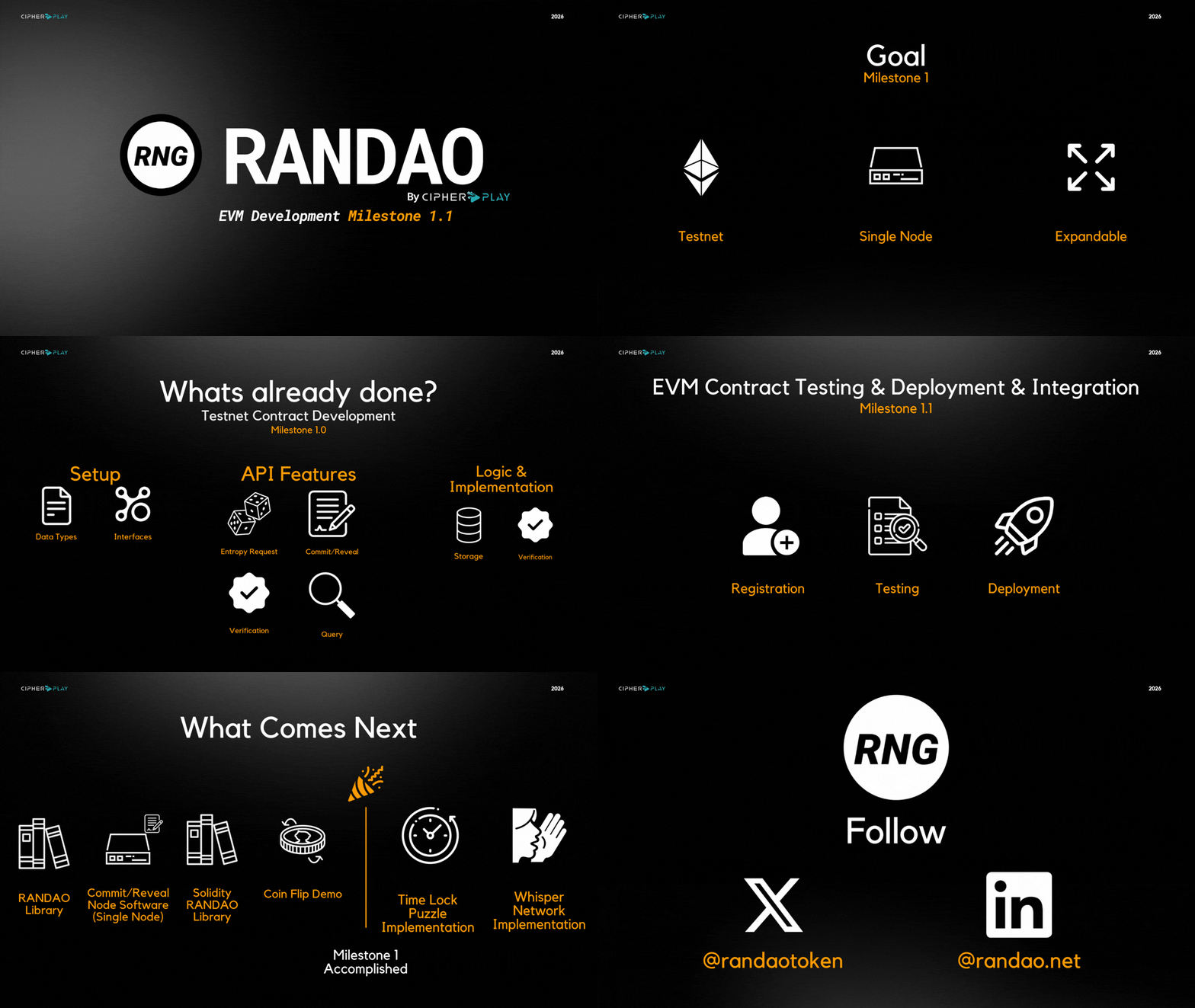
Milestone 1.1: Operationalizing Onchain Randomness
Most conversations around blockchain randomness focus on cryptography alone.
That matters — but equally important is operational reliability: how randomness systems are built, tested, and deployed in practice.
Milestone 1.1 tightens that loop.
Think of it like moving from a prototype engine on a workbench to an engine mounted, tested, and running in a vehicle.
This is how onchain randomness becomes dependable infrastructure rather than experimental tooling.
Provider Registration: Joining the Network
Providers can now register and join the RANDAO network.
In real-world terms, this is onboarding power plants to the grid before electricity can flow.
Registration defines:
- Who is allowed to participate
- How providers are identified
- The foundation for accountable proof of randomness in crypto
This step enables decentralization without chaos — a prerequisite for any serious blockchain RNG system.
Testing: Trust Starts in the Pipeline
All core logic is now covered by unit tests running automatically in CI.
This ensures:
- Every change is validated
- Regressions are caught early
- Cryptographic and protocol guarantees are enforced continuously
If randomness is the foundation, tests are the stress tests that ensure proof of entropy in crypto remains verifiable under change.
Deployment: From Commit to Testnet
On merge to main, contracts now deploy automatically to testnet.
No manual steps.
No “it worked on my machine.”
Just deterministic execution.
This mirrors how mature infrastructure companies ship:
code → tests → deploy → verify
Operational discipline is what separates experimental randomness from reliable blockchain randomness you can build on.
Closing Thoughts
We’re building RANDAO so builders never have to ask:
- What is RNG in blockchain?
- How do I trust randomness onchain?
- How does this compare to Chainlink or Bitcoin’s randomness model?
Instead, they can focus on what they’re building.
If you’re working on EVM, GameFi, NFTs, or any system that depends on verifiable randomness, I’d love your perspective.
Read the docs, explore the repo, or reach out directly.
📧 contact@randao.net